
"The Housemaid" and the Problem with Fatphobia
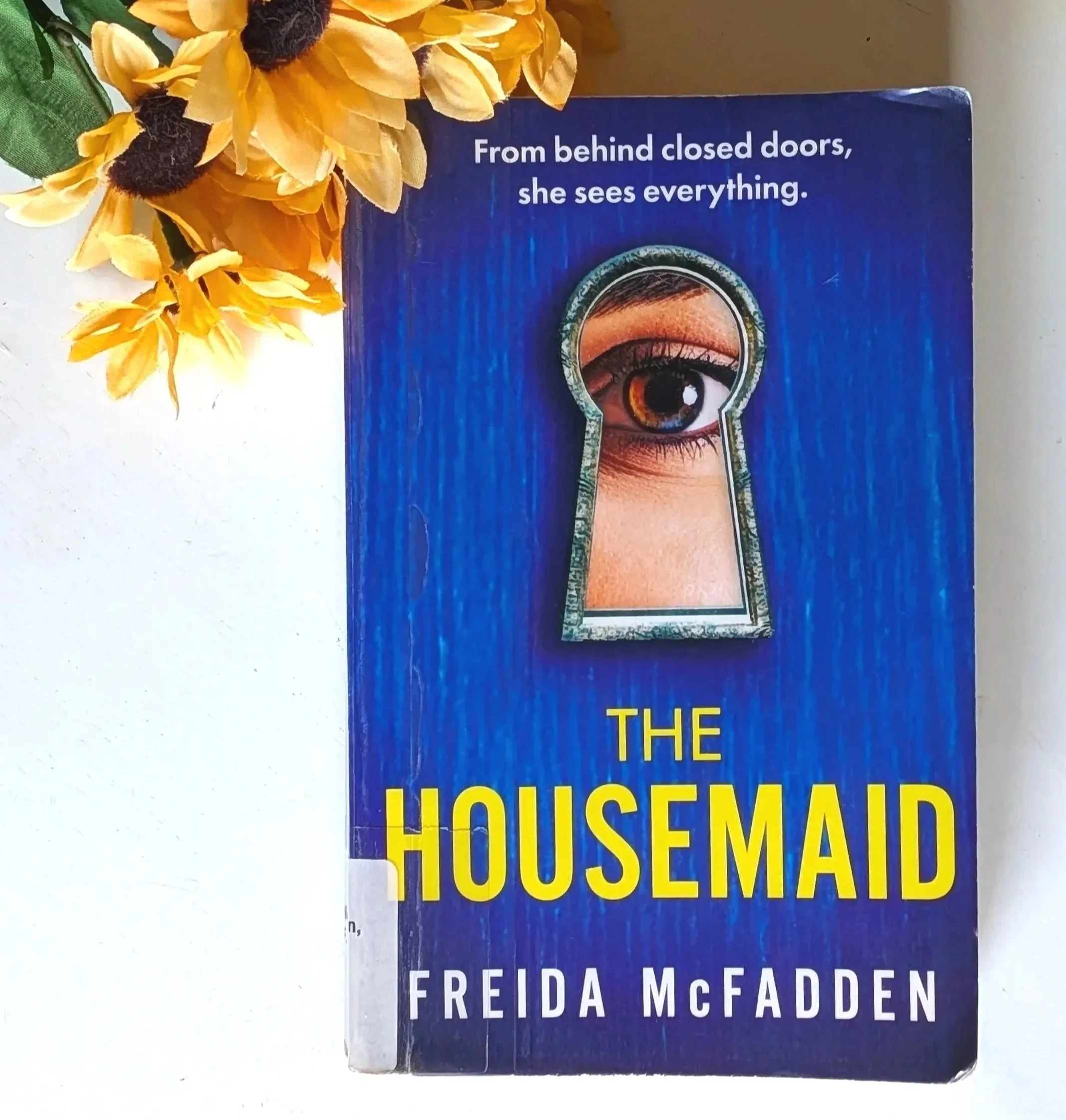
“The Housemaid” by Freida McFadden is not a complex read. It's a 2022 psychological “popcorn” thriller that follows a housemaid navigating her new job for a wealthy couple that seem intent on psychologically torturing their employee. Netflix released a movie adaption in 2025 directed by Paul Feig (previously of Bridesmaids (2011) fame) starring Amanda Seyfried and Sydney Sweeney that people seemed to like. The writing style of the book is extremely surface level with an easy-to-follow plot that makes the story appealing to a more general audience. I’ll even confess that the twists are very fun and placed at the right time to make readers gasp in shock at the reveal, even if the twist is predicted ahead of time. It’s an entertaining enough read if you don’t think more than two seconds on most of the plot points. But, unfortunately, I did think more than two seconds about a specific plot point:
The titular housemaid, aka Millie, just hates fat people.
Well, specifically, anyone who happens to threaten her happiness also happens to be fat. People who don’t threaten her happiness are never fat. In fact, people who enjoy her company and promote her happiness always seem to be quite fit and attractive. There’s never any real reason or resolution for that character trait presented in this book except to shame people who happen to be above a size six and associate moral goodness with conventional body weight.
Some minor story spoiler warnings for “The Housemaid” by Freida McFadden ahead. I’ll try to keep most of the major twists and general plot discussion hidden though, just so you can have some surprises if you decide to read this popcorn thriller to make your mom/neighbor/coworker/book club happy.
After being hired by the Wincesters to clean their house, cook, and take care of their child, Millie starts having a bad time. Her boss, Nina, continually gaslights and harasses Millie for seemingly no reason at all except to exert power over her employee. But, Millie has no choice but to remain in this employment due to her life circumstances. Therefore, like any person in a position of subjugation outside of their control, Millie starts to resent Nina. As part of that resentment, Millie regularly judges and comments on Nina’s weight throughout the book. Well, specifically at one point, Millie makes the comment that Nina “looks to be a size 14” (page 56), which is supposed to be a large size in Millie’s mind, because Millie is only a size 6. More on that in a bit.
In fact, other characters also comment on Nina’s weight, such as the moms from the PTA. From the context of the comments, it’s implied that Nina’s apparent weight gain is a reflection of a moral failing of her character. Nina’s weight is often connected to her mental well-being, with the fellow moms from the PTA correlating Nina’s weight gain with their thoughts on her known mental health instability and previous mental hospital stay because obviously a sane person would remain skinny. After all, only crazy people dare to gain weight.
Even though at one point, Millie internally comments “I respect that she doesn’t scrutinize every calorie that goes in her mouth” (Page 102), this direct statement doesn’t seem to reflect her actual beliefs. In fact, it comes across a bit sarcastic as Millie proceeds to highlight other choices of Nina’s diet, such as “Nina isn’t gluten-free or vegan” (Page 102) and, not to mention, the entire thought is inspired from having to cook her boss’s “usual” breakfast, which is incredibly saturated in butter and other known fats.
In certain contexts, this may be forgiven as a noted character flaw of the main character. Perfect, always morally right, characters are boring and it would be incredibly human for a twenty-seven year old size six female to weaponize their boss’s weight gain in their private resentments of their adversary. Vanity and idealizing body image standards are drilled into young women for most of our lives. It’s incredibly natural for someone, especially someone of a younger age and maturity level, to innately villainize larger weight as a sucker punch to get an edge on an unstoppable foe.
But then, there’s the grocery store stalker.
As Millie is being psychologically tortured by Nina, her paranoia grows about how much effort Nina is going through to control her life. At one point, when Millie is at the grocery store running her errands for the family, someone starts following her through the store and the reader only knows it’s the same person because Millie exclusively identifies the man through his weight:
“I notice a heavyset man with gray hair watching me from the other end of the aisle” (Page 157)
“I notice that heavyset guy again.” (Page 157)
“That heavyset man” (page 158)
It should be noted that there are no more “heavyset” descriptions once it’s revealed the character is a man doing his job and not a stalker with a mysterious vendetta against Millie working in service to Nina. Once the character is no longer a threat to Millie, his weight is no longer used against him as an identifying factor of his character.
Eventually, it is revealed that Nina’s weight gain does have a purpose for the overall story and explanation for some of the character’s actions. But this could’ve been done without the character’s larger size being associated as a reflection of the character’s supposed moral failing. It’s even more unfathomable to me that the extra weight was seen as a moral shortcoming when Nina wasn’t supposed to be more than a size 14 for the entire thing and size 14 really isn’t that super huge. In fact, it’s below average for American women as 67% of US women wear size 14 or above. (World Metrics)
Now, on a personal note, I’m coming at this book from the opposite perspective of Millie’s life: I have not been smaller than a size 12 since middle school. I’ve been fit too. I was All-State for softball in high school, played in college on a scholarship, and still walk 1-3 miles a day with my dog every day. As the proud descendent of Midwest Kansas farmers, most people around me haven’t been smaller than a size 12 since literal childhood either. An adult woman who can still fit a size six is an obscurity to me. I know they exist, but I think of them as extremely small humans, not myself as a beast of a woman. It seems like an abstract concept only realized in fictional novels such as this one. Someone who is a size 14 would not reflect a moral failing to me, because that’s the kind of woman I see in the mirror or in my surroundings every day.
It seems unfair to me to assign morality to physical attributes, especially for something as fluctuating as weight. There are several factors that go into weight gain, and loss, that are often out of direct control of the person impacted by them. Some people might defend the sentiment behind fatphobia, arguing that health is the priority for these types of prejudices and it’s good to encourage people to be healthy through villainizing weight gain as a moral failing. The issue with this sentiment is that weight loss is not always healthy and weight gain is not always unhealthy.
In fact, in the real world, a study of 40,420 U.S. adults using National Health and Nutrition Examination Survey (NHANES) data from 2005-2012 looked at health stratified by BMI and found that nearly half of overweight individuals, 29 percent of obese individuals and 16 percent of obesity type 2/3 individuals, were “metabolically” healthy (School of Public Health | University of Illinois Chicago). In the book, for Nina, with the reasons revealed for her weight gain, one might argue that it was healthier for her to gain that weight than it was to remain at her original smaller size. For Millie, she was still a judgemental prick and capable of evil even though she was only a size six. Yes, her actions at the end of the book were evil. Even if they could be justified, they can still be morally wrong.
The subliminal nature of Millie’s fatphobia is precisely the problem behind fatphobia as well. Most people probably don’t even realize the damage of the character’s beliefs and her association of anyone that is against her as a big ole fatty as problematic because her comments about judging someone’s weight are so common for people in society. But the normalization of fat shaming and tying weight gain to some sort of moral failing has real world consequences.
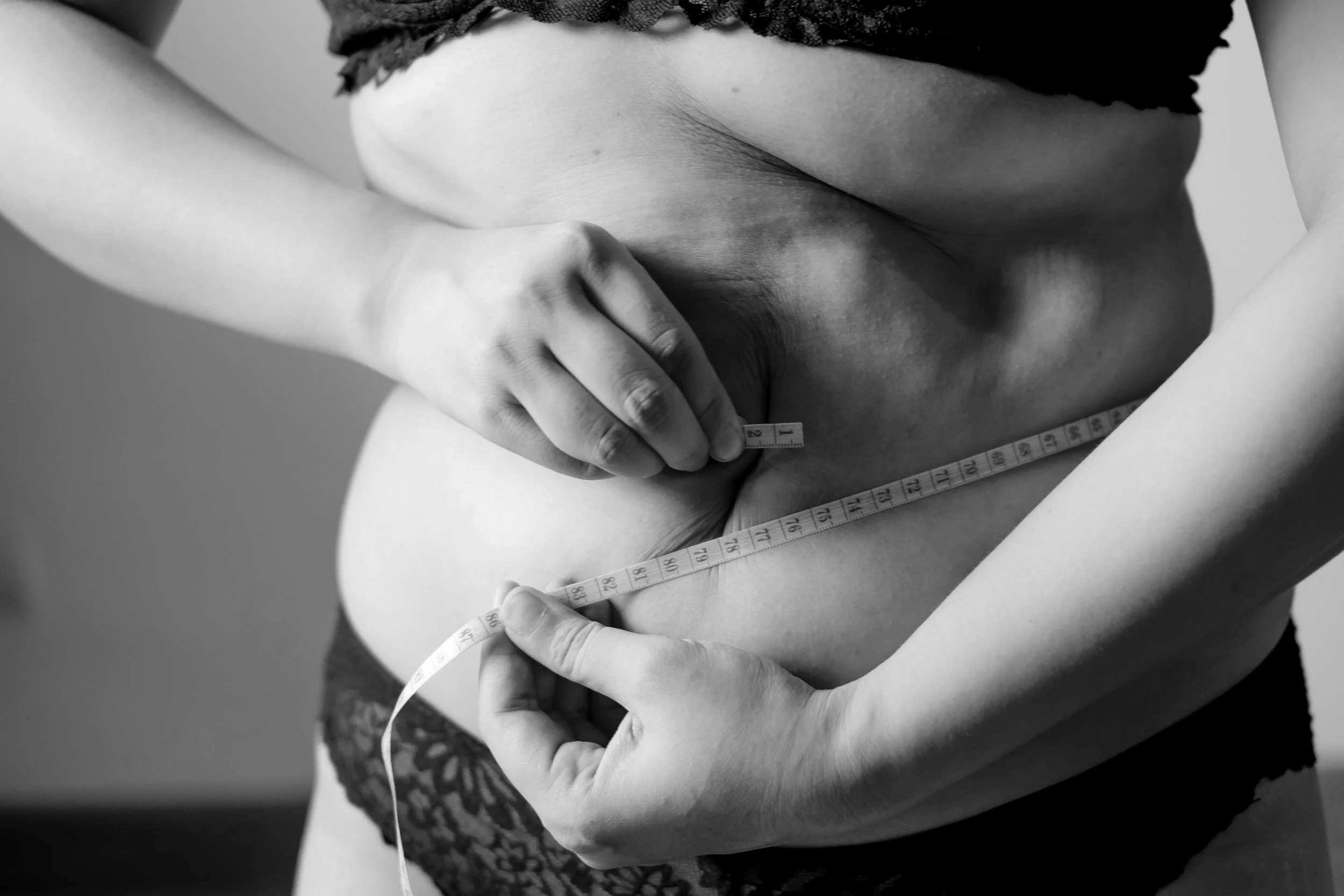
In a recent study, 64% of preteens rated a fractal image as “good” after being shown a picture of a thin person, but only 59% did the same after seeing an image of a bigger-bodied person.(Fatphobia Explained in 25 Stats & Trends). Weight stigma is also a risk factor for those experiencing it for inflammation, stress, high blood pressure, increased blood sugar, Type 2 Diabetes, depression, anxiety, lower self-esteem, higher body image dissatisfaction, disordered eating behaviors, and weight gain. Experiencing weight stigma also not only increases one’s risk for negative health outcomes, but it also leads to health care avoidance by people in larger bodies, increasing the chances that they do not receive preventative care services (e.g. cancer screenings). (School of Public Health | University of Illinois Chicago)
The author of this book is also a medical professional by trade. (The National Association Of Medical Doctors) Despite the overwhelming evidence that the BMI (body mass index) utilized to determine whether someone is healthy or unhealthy based on their weight is outdated and inaccurate (Why BMI is inaccurate and misleading), weight stigma remains extremely prevalent in the health industry. (Psychology Today) More than half of women living in larger bodies have reported experiencing medical fatphobia from healthcare professionals, including inappropriate weight-related comments with their weight being a barrier to receiving treatment. (Withinhealth.com)
There's no one trait that defines who is evil and who is good. However, by tying something as fluctuating as someone's diet or body mass to morality causes more issues than solves them. If it’s important to the story for a character to have a larger body size, it can be done very easily with a tone of neutrality rather than animosity. Being fat or fit or skinny is just a matter of fact, such as having brown or blonde hair, and not a trait to indicate or imply a character’s morality.
To associate weight gain with evil gives the message to readers that it’s not okay to be large, and in fact you may not be a morally good person if you’re large, which is even more damaging when the “large” size documented in this book is what 67% of American women experience. It’s a promotion of unhealthy body image idealization to meet an arbitrary standard decided by a beauty and diet industry that profits from people feeling bad about their weight and lack of easy access to affordable healthcare to work personally with a doctor to accurately determine health goals. For the record, the diet industry is estimated to be a $60 billion per year industry with a 95% failure rate, and is expected to reach $295.3 billion by 2027. (Women's Diet and Fitness) To summarize those stats, already rich people are slated to get even more rich from people feeling bad about themselves and needless fatphobia directly funnels that money into their pockets.

If weight is truly a concern for your health, please work directly with your doctor to determine the correct course of action to address the concerns. Do not let uninspired, shallow popcorn thrillers determine your self-worth based on a grossly villainized perception of your weight when they can barely create a coherent plot beyond outrage needle drop moments. Lazy writing shouldn’t destroy your health by accidentally normalizing incorrect and damaging beliefs through thoughtless character building.
Now, if you’ll excuse me, since I’m a size sixteen, I’m going to set fire to the local orphanage and stalk some gal in the grocery store. It’s not my fault. It’s just my evil nature as a fatty. If only I were a size six, then I would only be capable of judging people who are mean to me in my life based on their physical attributes and allowing cheap popcorn thrillers remain as cheap popcorn thrillers rather than thinking more than two seconds on it as a larger reflection of society.
Life can be so unfair.