How Journaling Can Change Your Life

Life is literally the hardest thing we all endure. However, it can be easier to survive when we put our challenges into words, letting our pain be articulated through explanation rather than just as a mess of emotions that sit heavy in our chest or stomach. While a friendly ear to listen to those troubles is appreciated, sometimes it’s more beneficial to work through those thoughts without an audience and within the comfort of complete privacy. That way, you can develop your own understanding of the issue and then build confidence in yourself to process the tough thing without external validation.
That’s where the magic of journaling comes in! Journaling is the practice of writing your thoughts within a safe space, usually without the expectation that your thoughts would be read by someone else. They can be typed or handwritten, depending on your preference. While a ton of people advocate for handwriting their journals over typing (and there’s a lot of science backing that process) (National Library of Medicine), personally I find a bigger benefit with typing since it can keep up with my thoughts faster than handwriting and if it’s a choice between not journaling or just typing it out, I’d prefer to just type it out. But to each their own and I do enjoy a handwritten entry every so often.
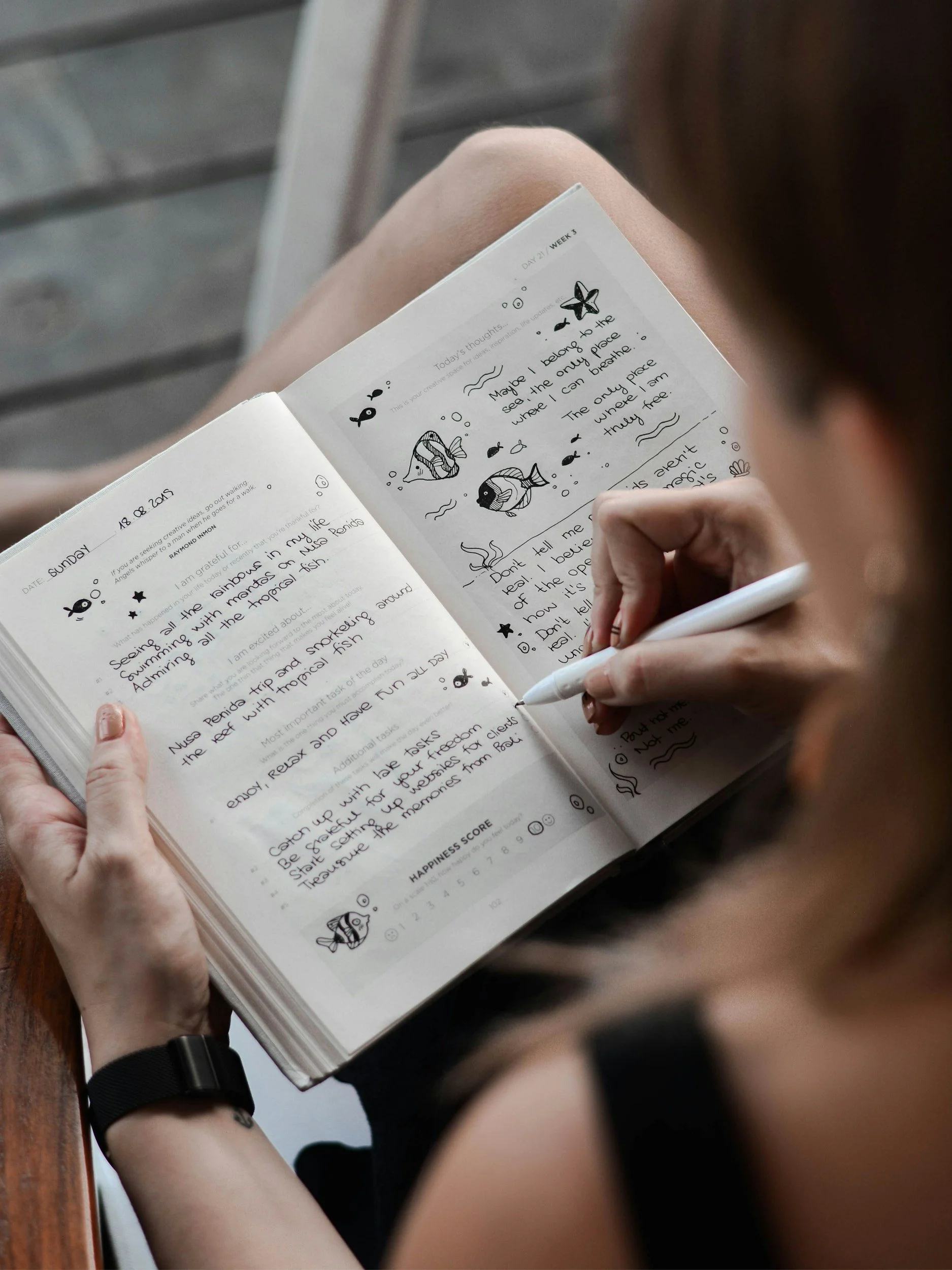
I personally have kept a journal for pretty much my entire life. From the moment I discovered what diaries were (thanks Dear America book series) and figured out how to write on my own, I have been keeping my private thoughts locked away in various journals and diaries. My first entry was when I was six years old in a little red notebook I must have asked my parents to buy for me. Not that I had anything major to report, but I think it was very healthy for little me to still develop her own safe space through her first diary to process her inner understanding of the world. Especially since I had such an early love for words, I would like to credit my early diary with my development as a writer and being able to articulate complex thoughts and feelings through those early practiced words, even if they were just for me (or my little brother, when he tried to snoop on my secrets).
I continued to keep my diary in various little journals and notebooks all the way through high school, jotting down complicated thoughts about my middle school crushes and, most importantly, documenting my eternal love of the Jonas Brothers. I finally took my diary to a digital word processor in mid-high school because I found that typing my rapid hormonal teenage thoughts was more efficient than handwriting them.
Nowadays, I still mostly type out my diary entries in a dedicated folder on my computer. It’s just easier as well to punch out a quick diary entry on my phone that is sent to that folder when I’m on the go and need a quick outlet to process something. I also maintain a self-described “chaos” notebook, which is a cheap composition notebook where I scribble out quick thoughts or keep notes on things in my life. Rants about stressors at my day job are usually saddled next to notes about digital marketing which are then next to a potential short story outline in my chaos notebook. It makes sense to no one but me and that’s the point.
For me, my journal is an exercise in emotionally processing and developing an improved inner confidence in how I understand the world. I often joke that my diary is living proof of how I’m my own unreliable narrator in my life as I look back on previous entries and realize a different perspective on an issue than initially documented. My journal makes me my own best friend and advocate as my documented private thoughts are the most reliable source of truth with how I perceive the world. It’s nice to be able to articulate complicated emotions in a completely safe space without judgement or prying eyes to offer an unwarranted perspective on an issue I wish to process on my own.
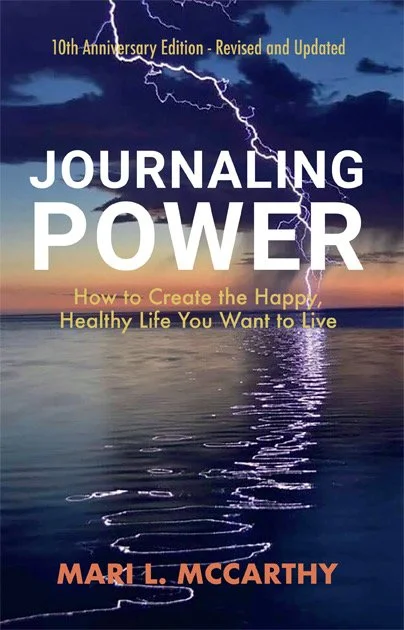
While journaling comes very naturally to me, the concept of essentially having an endless conversation with yourself through the written word that is read by no one else may be daunting for other folks. For those folks, “Journaling Power: How To Create the Happy, Healthy Life YOU Want to Live, 10th Anniversary Edition” by Mari L. McCarthy is an excellent resource on the power of journaling and the impact it can have on improving lives.
From the book description, “in this powerful 10th anniversary edition of her international bestselling book, Mari L. McCarthy reveals how a simple pen-and-paper journaling power practice can unlock your inner healer, restore your connection to self, and help you create a life that finally feels like it fits. Diagnosed with multiple sclerosis and facing mounting health challenges, Mari turned to journaling - not as a hobby, but as a lifeline.”
While McCarthy does provide personal insight into how journaling improved her health journey and multiple sclerosis diagnosis, there’s also a ton of scientifically backed insight into how journaling can improve lives in the book. Chapter 7 specifically includes how the impacts of trauma and stress are reduced through connecting emotions to written words, most commonly through journaling. I can personally attest from my own experience with journaling that stress and trauma can be greatly reduced through just writing it out in a private space where no one else judges your reaction to that event, like when the Jonas Brothers broke up in 2013. That was a lot for younger me to process on my own and my diary was a very important platform for me to articulate how unfair it was that Nick wouldn’t let my boy Joe shine on his own (Fastlife is still an incredible album and none of you nerds properly appreciated it).
I’m kidding. Mostly. (Definitely not about Fastlife being an incredible and underappreciated album.)
Luckily, the book not only offers guidance on the benefits of journaling to improve your life, but also provides several guided journal prompts so you don’t have to wait until your favorite beloved boy band breaks up to find an excuse to embrace the magic of journaling. Personally, I found the prompts very interesting to pursue as a seasoned diary-writer so I think they’re great starting points for folks just getting into the habit too. The book also makes it very easy to refer back to the prompts and re-visit them as needed through clear to understand headlines and the purpose for each prompt in how they can be utilized in a journaling practice.
Journaling has really provided some true improvement to my life and how I process my emotions. I’m excited that others have also found incredible benefit to the practice and there are tons of great resources encouraging others to enjoy the habit as well. “Journaling Power: How To Create the Happy, Healthy Life YOU Want to Live, 10th Anniversary Edition” by Mari L. McCarthy is a fabulous indie published resource perfect for all people interested in the power of journaling, from brand new writers to folks who have been journaling their entire lives.
There’s true strength in journaling. Whether it’s to help process complicated medical issues, as McCarthy does with her journaling practice, or inner emotional turmoil, like I do with mine, the simple act of trusting yourself enough to write down your worries and treat them as valid concerns even if no one else validates them does wonders for your life. I highly encourage folks to journal when and where they can. There shouldn’t be any rules for the practice, but I’m happy there are resources for the practice where available to provide guidance as needed.
For more information on “Journaling Power: How To Create the Happy, Healthy Life YOU Want to Live, 10th Anniversary Edition” by Mari L. McCarthy, please check out the following links
Disclaimer: A free copy of this book was provided in exchange for this review. You may read more about this blog tour at the following link: https://muffin.wow-womenonwriting.com/2026/10/journaling-power-10th-anniversary.html