
"Yesteryear" and the Temptations of a Tradwife Life
Modern life is hard. Everything is costing more money despite smaller paychecks earned with increasing work demands. An unstable social culture is being cultivated through exaggerated posts on the internet and lack of real life community distancing our chances at connection. AI looms in the short distance, threatening to claim hardworking jobs with cheap labor that produces less quality work and claim wages that support human lives. Nothing feels stable and nothing feels like it’s going right.
Wouldn't it be better if we could just stay home and manage the house all day? Play with babies if kids are your jam? If our days were spent making bread and soap rather than sending never-ending threads of emails that never actually resolve anything? That’s the promise of the Tradwife fantasy, but as “Yesteryear” by Caro Claire Burke shows, it’s an unfeasible and unfulfilling lifestyle more inclined to trap women than free them from the horrors of modern life.
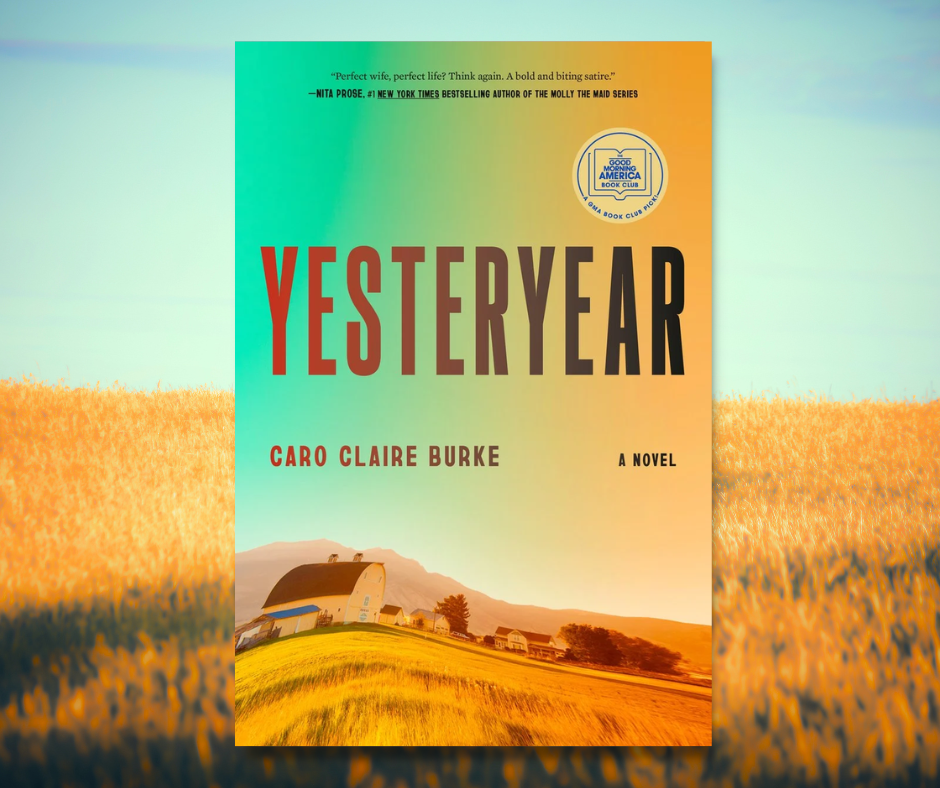
“Yesteryear” by Caro Claire Burke explores the complex reality of the tradwife lifestyle through the fictional Natalie Heller Mills, who operates the Yesteryear ranch with her husband and brood of children that she promotes through Instagram as a tradwife influencer. Suddenly, and without explanation, she wakes up one day and finds that her modern amenities that make her tradwife lifestyle so feasible are replaced with the actual reality of the lifestyle: all food has to be made from scratch, all chores have to be completed through manual labor, and her husband is encouraged to put her in her place as a “good Christian wife”. Her life is no longer a game to gain more numbers on social media, but something to survive outside of her scope of understanding.

The primary triumph of the reading experience is that it is incredibly compelling to uncover Natalie’s complicated personality and her motivations for pursuing the tradwife lifestyle in the first place. She is one of the most unlikeable female protagonists I’ve had the pleasure of reading in a while and it was so thrilling seeing how her biased perceptions impact her life. But one of those biased perceptions is that she believes a life as a wife will be easier and more celebrated than a life as a career woman. While seeded in her sheltered upbringing, this bias seems to be encouraged by a poor college experience as her first true venture in the outside world. Her lack of social skills makes her a pariah around peers, who are typically liberally minded young women aspiring for careers rather than families, and her studies fail to meet her exaggerated expectations for how college should work. She becomes extremely depressed and resents her independence. She begins to fear what the future will bring if it remains as hard and unpleasant as her ongoing college experience.
As a result, instead of working to improve herself to meet the challenge of an uncertain future, she retreats to the world she was raised in. She becomes a young wife and mother for a very rich politician’s son at the first opportunity to do so, not even considering other dates or romantic options. This is initially believed to be an escape from the corporate rat race and unpleasant life that she feels that her other classmates are doomed to. Natalie even spends a long time lamenting over her liberal college roommate, who earns a prestigious internship the same time that Natalie gets pregnant, and how her roommate is going to have a miserable life chasing the corporate ladder while Natalie gets to live a “perfect” life being married and having kids.
But Natalie quickly discovers that married life is not the escapist dream she was sold on. Instead, she finds out being a wife and mother is still hard work, just in a different way than the typical corporate ladder grind, and it’s not the hard work she wants to complete in life. For Natalie, birthing babies proves to be a traumatic experience that triggers postpartum depression that her support system waves off as “baby blues” that she just needs to run off. Then once they’re in the world, while those babies can be very cute, there’s still long sleepless nights as the little humans learn how to even sleep in the first place. Then there’s the discovery that her husband is worthless, unmotivated, and it’s expected to be her job to make him useful in addition to her management of everything else for the family.
“And please give my husband a spine. I’m tired of him needing to borrow mine.” ― Caro Claire Burke, Yesteryear
Then there’s the unrelenting boredom that comes with entertaining little ones, the complete lack of stimulation from coloring the same sheet of paper over and over again with the same AI slop TV show repeating the same nursery rhymes over and over again because baby brain cherish the security of repetition while adult brains crave novelty. There’s also no escape from it. As Natalie discovers, motherhood is work. It’s most often under-appreciated and over-looked work, but it’s still work.

Granted, I’m not a wife or a mother. In fact, I’d probably be identified as one of those “Angry Women” Natalie continually villanizes, who prioritizes a career and her own self-interests over raising a family. I did nanny for ten years for a variety of children, aged from baby to preteen, which gave me a shadow of an idea of how that life works. But the difference is that I was usually expected to give the kids back to their parents at the end of a shift and I was also paid for my time and labor. I imagine it’s tougher to do it full time.
After all, full time mothers are typically not paid for their time and labor. The value of their work is intrinsic, with no time off, which is a value for some folks but not for all. If someone isn’t intrinsically motivated to be a full-time mother or wife, then it can be as grueling and demanding as a bad corporate job for someone aspiring for a fulfilling career. The issue is that the tradwife movement attempts to sell folks on the idea that everyone would prefer to stay at home and play with babies and clean the house all day long when that is far from the case. It’s also far from the economic reality for most parents, who may actually aspire for that lifestyle but the current situation is that in 2025, the average annual cost of raising a child under five in the United States reached $27,743 (Smart Asset.com). Over the course of 18 years, this is estimated to cost over $300,000 in the United States (CBS News), which is a hefty chunk of change for most folks and typically requires both parents to work jobs that pay money to sustain.
However, that’s not to say the career first/corporate job lifestyle is innately better. Lots of people are currently incredibly dissatisfied with their jobs and career as well. In 2025, global employee engagement declined for a second year to its lowest level since 2020 (Gallup) and there has been a lack of job market growth over the past 12 months as of March 2026 (Yahoo Finance). It’s this instability and lack of satisfaction in the career sector that motivates folks, like Natalie from Yesteryear, to aspire for a lifestyle to escape that Sisyphus level grind and live away from traditional capitalism that is making us so openly miserable. From personal experience, making bread and cleaning the kitchen is much more enjoyable than repeating myself in the 20th email of the day regarding an outdated process that management refuses to update. But it’s equally enjoyable to earn my own income that supports my book-buying and crafty hobbies that occupy my free time outside of work. I don’t have to run it by anyone else if I decide to splurge my money on takeout or a new book to make my life just a tad easier at the moment. (Although there is something to be said about desiring without intent, which you can read about in my last blog post once you’re done with this one.)

There’s a certain level of dependence that is required to fulfill the tradwife lifestyle. While Natalie depends on her rich and powerful in-laws for the income required to sustain her ranch and family, catering to their whims at the expense of her values, even more practical applications of the lifestyle in the real world typically require a tradwife to depend on their partner for the income to manage the household and family. In a best case scenario, this is still asking the tradwife to surrender opportunities to invest in their own retirement fund or otherwise build financial independence in exchange for the time and energy required to maintain a household. In a worst case scenario, such as Natalie experiences, even her attempts to build her own independent income through her Instagram influencer career are thwarted or otherwise attacked as her every action is supposed to be in service to her family and husband, including earning money. That’s her job as a wife and mother after all.
“A trade must take place for this life to enter the world. As my body slowly halved open like a peach, I realized it was me who was losing my life; me who would vanish from the world to make room for this new child. I will never be Natalie again. I will only ever be Mama.”
― Caro Claire Burke, Yesteryear
As Yesteryear explores, there is no real escape from the nightmare of traditional capitalism. Both the career-first and family-first lifestyles have their faults and can cultivate misery in a life. Fulfillment only comes from a life lived with intent. If it’s within someone’s values to live a life in service as a wife and mother to their family, and also feasible for them to do so, then by all means spend your days feeding that sourdough starter and looping Cocomelon from sunrise to sunset. If it’s also within someone’s values to never marry and chase a corporate grind, then have fun with your pivot tables and forced laughs at your boss’s crappy jokes for a chance at a promotion.
So let’s not pretend any singular lifestyle is the preferred “perfect” life. Let’s also not pretend we can easily escape the hardships of life without sacrifice. Work and hard choices are required regardless of the life you live. There’s no easy way for any of us to live this life and that challenge is what makes life worth living. If someone on Instagram is selling you something different, do the healthy thing and just unfollow them. In fact, go ahead and just delete all of your social media apps. That way you can have more time to actually live your life than pretend you are living through someone else’s curated profile.
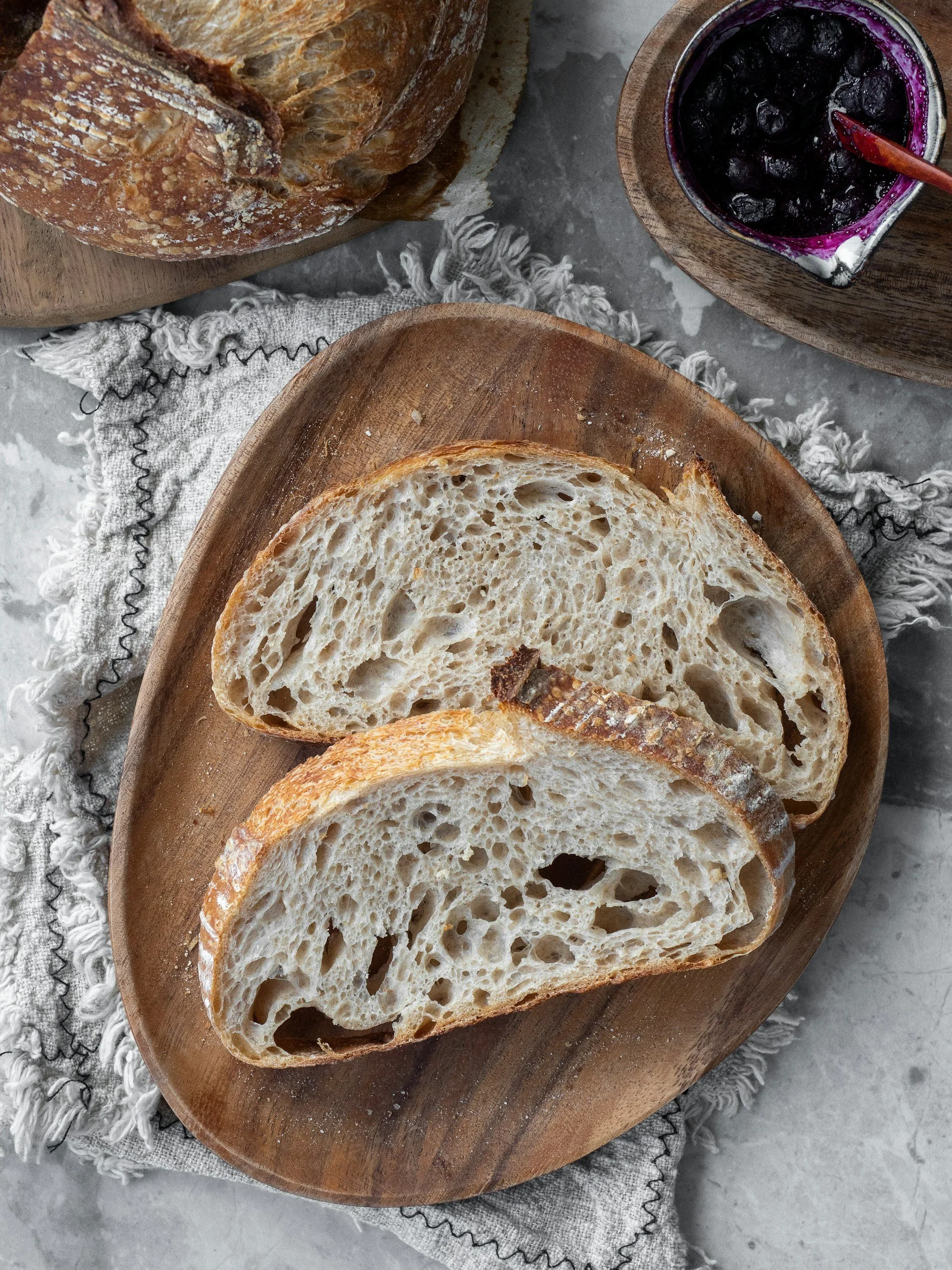
Otherwise, you might find yourself ending up like Natalie Heller Mills, trapped in the past and bitter about the fantasy of an easy life she was sold on being nothing more than old sourdough, dirty kids, and lumpy soap.