“Half His Age” and the Dangers of Desire
Hyper-consumerism and instant gratification are rampant in our society right now. It’s intended to be a celebration of our modern technology when we’re able to buy the item we wanted exactly 0.5 seconds ago and have it magically arrive on our doorstep two days after realizing it existed. We don’t question the feasibility of such convenience or whether fulfilling that desire actually brings satisfaction to our lives. We’re encouraged to buy now, regret later, and never fully question whether automatically rewarding our wants adds meaning to our existence.
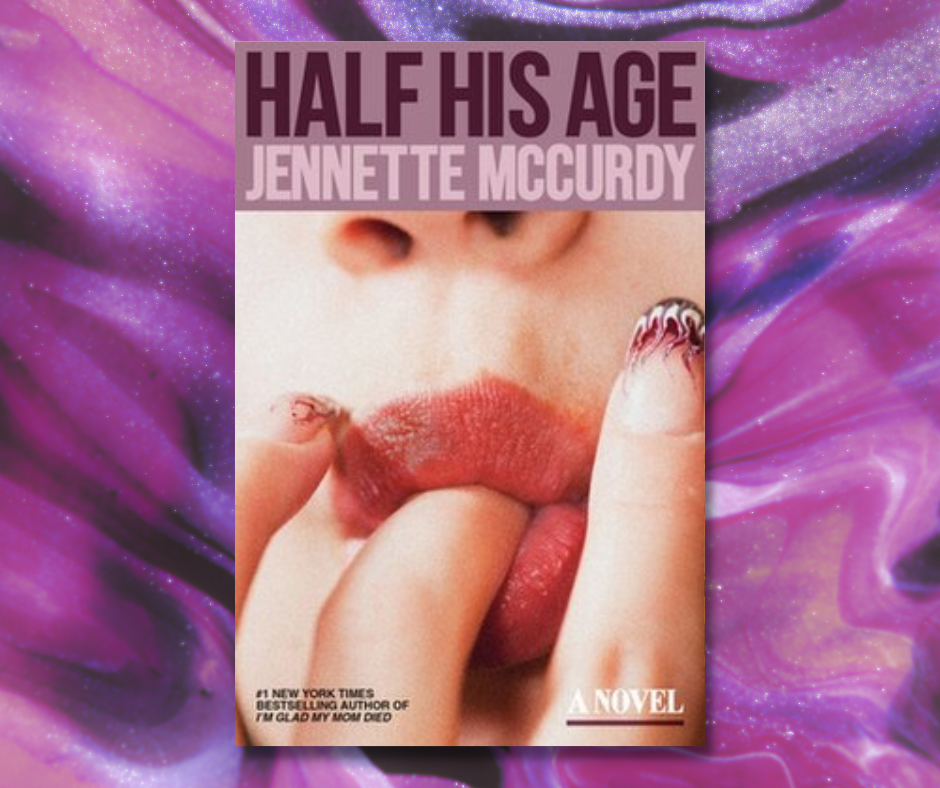
The shallow satisfaction that comes with instant gratification and fulfilling directionless desire is exactly what Jenette McCurdy explores in her debut fiction novel “Half His Age” and I think most readers missed that point because they didn’t like the image being reflected back at them with her narrative.
To be fair, “Half His Age” does feature a rather grotesque storyline: a struggling young high school student pursues a relationship with her much older, very married high school English teacher. No one wants to see themselves reflected with that type of plotline or character. But to reduce the novel to a poorly written glorification of a pedophilic relationship is an insult to the overall narrative and larger message that we should not always be granted what we want in life. In McCurdy’s novel, this theme is shown to apply to both lust, with the relationship between the student and the teacher, and hyper-consumerism, with a sideplot regarding the main character’s shopping addiction where she’s broke, but continues to needlessly purchase items to salve her internal discomforts.

We are currently a society being encouraged to “want” and satisfy that want even if it doesn’t warrant gratification. This is obviously beneficial for advertisers, who are being paid for whatever you buy regardless if you actually need it or not, so it’s not like anyone is going to be discouraging this practice of automatically buying every little thing you want any time soon. We are also a society building a culture of hyper-individualism and a “me first” mindset. We’re being taught to only look out for yourself and do what you need to do to survive rather than actually engage with others and sacrifice some aspects of yourself to engage with a larger community. Wellness influencers encourage the use of “boundaries” to set limits on our relationships without regard for how that action actually impacts connection to others. Social media feeds even promote this attitude by tailoring “for you” pages directly for the user’s interests and purposely exclude other perspectives.
(As a side note, I love this Substack article about how not every content should be for every audience. You should check it out once you’re done with my article: The "what about me" internet)
As a result of these two promoted ideals, desire is now being conflated with entitlement. We believe that wanting a thing is the same as deserving the thing. There’s little reflection or intent being placed behind our longing. We’re just accepting what we covet as our inner guidance for fulfillment in our lives. If we want it, we seek it. But, as expressed in “Half His Age”, fulfilling directionless desire is creating shallow experiences and reducing our satisfaction in life.

I’ll try not to spoil anything beyond general plot descriptions for any potential future readers out there, but the main character of the novel, Waldo, is written as lost in life. Parental guidance is largely absent as her parents prioritize their own wants over the caretaking of their child, her future is aimless as poverty prevents access to most opportunities in life, and she feels no connection to her classmates. But she still has wants, as it is human to desire (especially for a seventeen year old raised in our hyper-consumerist culture), but her wants have no intent or direction. She fulfills them because she’s looking for any sort of meaning in her life and is using her wants as guidance for that meaning. But satisfying her inclinations usually results in more pain and discomfort in her life than if she just left the want as it was: an aimless wish and not something to be automatically rewarded just for existing.
“Don’t be concerned. This is good. This is great. This is what I want.” -Waldo in “Half His Age” by Jennette McCurdy
Choices and control are seemingly limited in Waldo’s life. She is only allowed to want very few things so she will do whatever it takes to obtain those few things. She’s not allowed to want college, so she buys cheap clothes through online shopping instead. She’s not allowed to want a reciprocal genuine human connection, so she seduces her unavailable high school English teacher instead. Waldo lives her life and wants without intent because it’s easier for her to do so and, as a result, creates a shallow existence that conflicts with her larger desires for a more meaningful life.
There’s an opportunity for growth that occurs when desire remains unfulfilled or a challenge to satisfy. It forces the want to be considered with intent rather than as a blind whim. When an action is taken with intent, it has a chance to create a more meaningful experience as it can be considered for both positive and negative outcomes. If a positive outcome occurs, it feels truly like a reward for the effort taken to create the achievement. If a negative outcome occurs, then it’s an opportunity to learn from the experience and reduce the chances of it occurring again in the future. If an action is taken without intent, then both a positive and negative experience can surrender to a “well it could’ve happened to anyone” type of mindset that reduces the impact of the action. It takes away responsibility from the choice to fulfill the desire and, without responsibility, there’s no accountability for whatever happens, good or bad.

Some of the loudest critics of the novel come from BookTok, which has a hyper-consumerism problem. Booktok teaches its viewers that it’s more important to hoard newly purchased books rather than actually read or engage with the texts in a meaningful manner. I’m not blaming them. It’s not only easier (and quicker) to buy books than read them, but it’s also easier (and quicker) to film content based on buying books than reading them. Not only is it being promoted that it’s more important to hoard brand new books, but it’s also more important to buy what is trending regardless of whether the reader is actually interested in the material. It’s resulting in books like “Half His Age” being read by readers who aren’t actually interested in the material or a deeper understanding beyond the shock-value storyline, but just want to meet the trend of the fact this is the next book offered by Jennette McCurdy after her first book “I’m Glad My Mom Died” went viral. Readers aren’t enjoying the book because it’s not anything that would actually interest them, but they’re reading it anyway because expectations are telling them they want to.
Choosing books based on intent rather than an algorithm creates a more fulfilling reading experience. Having to wait for a copy of a book to become available at the library or hit the sales racks as a used book rather than automatically adding a book to a cart requires a reader to actually consider if it would be a narrative they want to engage with. Blind purchasing books based on what everyone else is talking about creates shallow reading experiences and, in my opinion, can actually discourage an aspiring reader if they don’t enjoy what everyone else is reading.
In our day and age, there’s an infinite number of books available for readers. As much as it hurts to admit it, it’s impossible for a single reader to consume every single book available in the world. In order to enjoy reading, choices are going to have to be made about what to actually read. Meaningful reading experiences can be found once a reader puts intent behind what they want to read and how they read. Granted, it might take some practice to discover what you want in life, but it doesn’t have to be a blind ambition as Waldo experiences in “Half His Age”. It can be a well curated experience if some responsibility is accepted for what is being desired.
Wanting with intent provides more autonomy in our lives. We no longer become slaves to an algorithm if we truly consider our purchases before thumbing that all-too-easy “Add to Cart” button on an impulse buy. Choosing our desires ensures our relationships become a matter of choice too rather than obligation or deferment. Our lives, in general, become more purposeful when we have the opportunity to choose how to live it rather than submit solely to mindless whims. Just as Waldo discovers throughout the course of “Half His Age”, we always have control of the direction of how we want to live our lives. It’s just a matter of when and how we want to take the wheel.