
Book Marketing Has No Rules
Here’s the thing: I’m a writer first and foremost. Graphic designer, probably second. Marketer, like, fourth or fifth on the list behind all of the duties required for publishing books, but it probably should be third. I’ve been managing my own publishing imprint since 2018 and, at the time of this writing, have published five books under it. Three books under my own name, two belonging to other authors. I leave the responsibility of book marketing to the author (because, again, I don’t know what I’m doing so I’m not going to ruin other people’s work in that effort), so I won’t be discussing the other two published books in this article. But for my own three published books, each experience with marketing has been wildly different because I strongly believe there’s no rules in book marketing and we’re all just winging it.
To start, I would like to think I have pretty solid experience in marketing. Before any formal education or training, I did run a moderately successful YouTube channel. While 2300 subscribers and half a million views isn’t very impressive to the actual big dogs in the industry, it was an incredible feat for a small town Midwest gal running it in her free time between full time school, full time softball, and 3-5 part time jobs at any given time. I even got paid for it and everything.
Even without the guerilla self-taught YouTube training, I also graduated with a bachelor’s in Journalism and minor in online visual media, which actually has a lot of crossover with marketing experience since my small liberal arts college often combined journalism classes with marketing classes to fill class counts. I also did a couple of social media internships for local companies. One of my first big girl corporate jobs was for a marketing company, although I dealt more with the technical aspects than the big picture idea conceptualization and execution stuff.
So I would like to think I have some semblance of an idea for what I’m doing to market my books.

However, for my debut novel How to Survive a Ghost Story, I got extremely, extremely lucky. Well, I guess I made the luck for myself. But How to Survive a Ghost Story was published at the peak of my YouTube fame. My “Starkid Try Not to Sing” videos were doing really well at the time to bring in new traffic for my social media channels which then put new eyes on my promotions for my book which then, occasionally, led to sale conversions since the humor in Ghost Story is pretty similar to Starkid (and my former YouTube channel) humor. I also have a fantastic support system and tons of people who know me in real life were very excited to buy my very first novel to support my lifelong dream, even if they weren’t going to read it. Despite my limited marketing knowledge, I did intentionally set the release date for Ghost Story to be September 20th as I determined it was late enough in the fall season for people to feel prepped for the spooky season, but not late enough that I would miss the post-release marketing opportunities in October to promote a ghost story before Halloween.
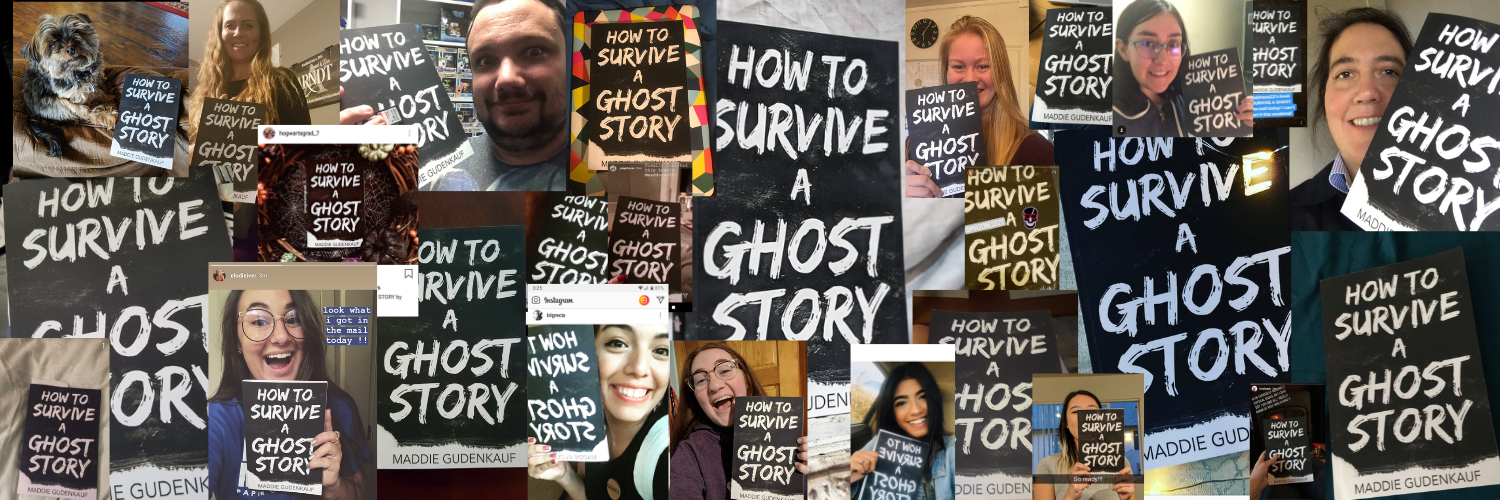
As a result, How to Survive a Ghost Story sold about 230 copies in its first year. This might not seem like much, but rough numbers estimate that most self-published novels sell less than 100 copies in a lifetime let alone in the first year of a debut (Long Overdue). I attribute that success to the aggressive marketing I was able to promote during the pre-order period with my existing social media audience and the fact my support system was so encouraging for my endeavor. At one point, I had a box of copies in the back of my car that I would sell in person whenever it came up in conversation. All of my coworkers at one of my jobs ended up buying a copy because of this tactic.
But the key things to focus on for Ghost Story’s marketing success was that:
I already had a large and active following on social media through my other content creation channels, such as YouTube and Bookstagram (pre-Booktok days here, people, throw me a bone.) I also had a wide network outside of social media because I was still working 3-5 part time jobs at a time when I published Ghost Story that spanned several social connection opportunities (aka I encountered a ton of coworkers/friends/acquaintances all of the time).
Social media wasn’t incredibly saturated with content yet. Sure, it was still shouting in a loud room, but if you had quality content, you could still find an audience in the crowd for your stuff. Mainly because it was also harder to make quality content. You had to actually have some skill with content creation software in order to create something well. I’ve sat with many aspiring influencers back in the day walking them through how to do what they wanted to do with all of the software required back in the day for content creation and social media promotion.
I was still working primarily as a freelancer/part-timer. This meant that even though I was broke and living in my parents’ basement, I had more flexibility to manage my promotional campaigns and content creation. I was practically glued to my laptop for the afternoons I sat at one practice or another for my nanny kids, monitoring my channels and creating new content for promotion. That level of freedom hasn’t been fully available to me in a full time career.
How to Survive a Ghost Story is an incredibly accessible story with wide reader appeal and a seasonal theme. Even though the genre of young adult paranormal comedy is a tough sell for traditional publishers, the light nature of the novel and not-so-spooky spooky theme meant that the book could appeal to non-readers in addition to more active readers interested in a spooky read for the fall season, which expanded the audience potential.
And the most important key factor: Eight years later, I still have yet to actually make a profit from publishing How to Survive a Ghost Story.
So while I believe the marketing and publication of How to Survive a Ghost Story was a massive success, because I’m not necessarily publishing my writing to make a paycheck, folks with a more financial focus for their novels may not consider it to be one.

Now Fatal Flaws was a slightly different story. While How to Survive a Ghost Story was published in 2018 at the height of my YouTube career, Fatal Flaws was published in 2023 about three years after my last posted YouTube video. I was still semi-active and public on social media, but without the same active audience from when I was actively creating YouTube videos. By 2023 too, TikTok already claimed the largest portion of the internet’s attention and, with it, created a vast over-saturation of content creation that made shouting in a crowded room more akin to whispering next to a sonic jet engine. I had no interest in TikTok (still don’t) and ignored it completely in my marketing efforts.
Given Ghost Story’s success, I followed the same aggressive pre-order marketing strategy and timeline for Fatal Flaws without considering the differences between my 2018 and 2023 audiences or the differences between the novels themselves. I even got more concentrated with the effort, partnering with a local bookshop to promote the pre-order campaign together to expand my audience.
It bombed.
After about three months of promotion, I only had a total of nine pre-orders by release day. There were also some issues with the pre-ordered copies with the partnered bookstore so the folks kind enough to play along with my marketing plan and pre-order the novel didn’t receive their pre-ordered copies of the book until later than the folks who ordered it on or after release day. Big yikes.
Fatal Flaws ended up selling about 50 copies total in its first year, not a bad number for my purposes, but clearly the pre-order campaign didn’t work for that success. I attribute that performance to a couple key factors:
My 2023 audience was widely different from my 2018 audience. Where my 2018 audience was incredibly internet and book culture savvy enough to understand the concept of pre-orders, my 2023 audience were mostly non-readers unfamiliar with this process. I spent a lot of time explaining to multiple friends and family how pre-orders worked to which they ultimately would tell me “I’ll just order it when it comes out” and then never follow through. Or they did follow through, but ordering it day of (or after) doesn’t help the pre-order numbers that everyone is always shouting about. (Penguin Random House)
Flaws is an absolute bummer of a book. I know this. I wrote it. Where How to Survive a Ghost Story is a fun and light-hearted read with a wide appeal, Fatal Flaws is for a very specific audience that doesn’t quite appeal for traditional non-readers. There’s very little crossover between the audiences for Ghost Story and Flaws so I couldn’t even rescue sales with my previous readers who enjoyed the fun nature of Ghost Story.
And, as you can guess, no. I still haven’t made a profit for this one either. I’m even deeper in the red for it because I invested more money into the marketing with smaller payoff.
I still adore Fatal Flaws, even though it is a massive bummer (massive bummers are cool sometimes), but I am disappointed I couldn’t make the marketing work for it like I wanted to.
Now the year is 2026. Not only are most of my social media channels dead, and have been dead for several years, but I am actively rallying against the use of social media in most capacities. Mainly because social media has become so over-saturated with AI and corporate content that I don’t find any value in these channels to build an authentic community anymore (Noema Mag). I also just really enjoy living my life off of the internet these days so I don’t want to suck all of my time staring at screens all day. So even though every marketing newsletter I research is still telling me I need it more than life itself as a small self-published author, my faith is low in being able to depend exclusively on social media marketing to promote my next book (Barnes & Noble)
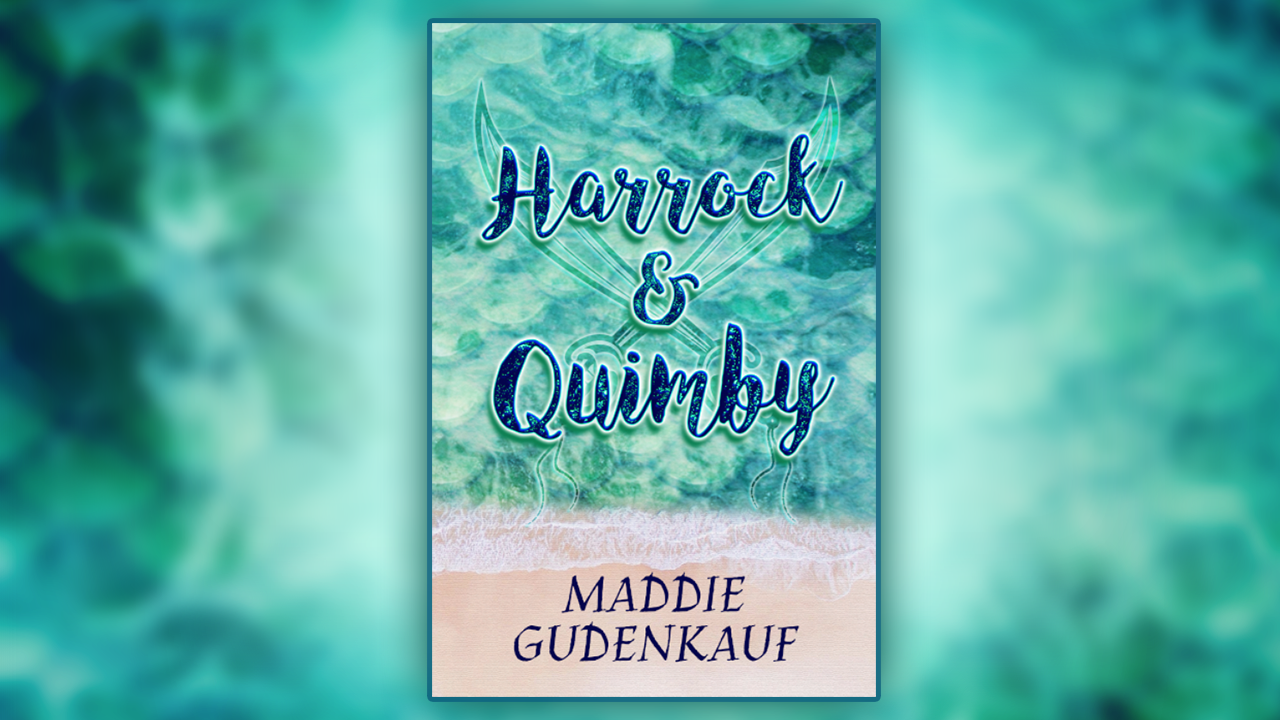
Fatal Flaws was also, again, a bummer of a book while Harrock & Quimby returns to a more fun and light-hearted approach which means there’s little crossover with the (small) existing readership from my previous book. There’s maybe some crossover appeal from the How to Survive a Ghost Story crowd who enjoyed the light-hearted nature of my first novel, but that book was published eight years ago at this point, which means it kind of feels like your college friend reaching out to ask if you’re still interested in going out to the club on a Tuesday. It might be a yes, but also we’re thirty now and have work in the morning and our knees kind of hurt so it’s probably only a strong maybe.
Therefore, I’m essentially promoting Harrock & Quimby from ground one. It’s not exactly ground zero, because I do recognize I have some existing audience from my previous novels and my support system remains fabulous. But it’s pretty much starting fresh with a brand new marketing model because I’ve decided the pre-order social media campaign doesn’t necessarily work for me. It might work for traditionally published authors going through the big publishers that already have established relationships with bookstores, but I’m still just a one woman show publishing through a print-on-demand imprint. I’m establishing my relationships one at a time with what is available to me. I’m also currently not in a position to reach the pre-order numbers required to create a real impact for book sales just yet anyways.
So the current strategy for Harrock & Quimby is to hard launch it on July 14th, 2026 and then never shut up about it once it’s already published and available for purchase. It’s easier for my current audience to support me if the book is already available to purchase across all retailers by the time I start talking about it. I’m not out here trying to make any leaderboards or best-seller lists. I just want to publish my fun books and share them with people who might enjoy reading them.
I’m also planning on focusing on marketing through more in-person and community building events rather than social media marketing. It’s already been a personal goal of mine to be more involved in my local community, so this seems like a great opportunity to bring those two goals together. By establishing the book as already available for purchase and having already printed physical copies available on hand for promotion rather than in the pre-order stages, this makes those quicker in-person sale conversions more accessible.
I have even surrendered to the ceaseless demands requiring social media marketing for self-published books. However, not through my personal social media pages that supported the bulk of my influencer career when I had one. (I’m pretty sure I just heard, like, three digital marketers gasp at that statement.) Instead, I’m revamping my teeny tiny public business Instagram page created for my imprint to serve as the primary promotion vessel for my books. This is largely a personal decision. My personal page has become largely private in recent years and mostly serves as a hub for me to remain connected to existing friends and family. I’ll still promote my book and writing and stuff through my private pages, obviously, but it’s not really a place for the social media grind required for self-promotion and the professional relationships I’m hoping to build through my business page.
It’s actually been kind of fun. I haven’t had to use the “build a brand and online content creation strategy” part of my brain in a while. I even made a content calendar! It’s a content calendar that would make most marketers cry (especially my former college advisor), but it’s good enough for me and will ensure I don’t burn out on an unsustainable posting schedule. Again, one woman show over here. I have to do chores and my day job in between posts.
For social media promotion, my efforts will be concentrated on Instagram and Substack. I’m morally opposed to Twitter/X and TikTok. Facebook is mostly AI slop garbage, but I’ll give it an obligatory post when I post to Instagram because why not, you know? Linkedin is not my scene. I literally don’t know any other social media off the top of my head, which means it’s also not my scene.
If you want to follow along at home for how well this new revamped book promotion and social media marketing strategy works, you can follow this substack or my business Instagram page for real time updates: https://www.instagram.com/dalygoodmedia/
You can also buy my newest book to support this crazy mission if you like enemies-to-lover pirate romances:
Read more about why you should support indie bookstores here: Why You Should Shop at Indie Bookstores
I’m excited to see where the next steps of this process take me. At the very least, if I fail, then I learn from it for the next book. Book marketing is all about winging it, after all, and each book has their own story to tell, even through the marketing. That’s at least what I tell myself because I have no idea what I’m doing, but at least I’m learning to have fun with it.